

“The reason you’re not celebrating Valentine’s Day this year is not because you can’t pull,” quips content creator Sherry XiiRuii on TikTok. “It’s because you knew that Chinese New Year is coming up and you wanted to mentally take that day to prep for Chinese New Year. So, it’s not because you don’t have game, it’s just because your mind has become very, very Chinese,” she says in a line so precise in its cultural triangulation that it has racked up more than a million views on that clip alone.
The comments section reads like a group chat between diasporic cousins. “I got my toe nails painted red for Chinese New Year, not Valentine’s Day. Priorities,” writes one netizen. “First Chinese New Year kinda nervous,” confesses another. “It’s a very Chinese time in our lives,” adds a third.
Chinese New Year – which fell between February 17 – 19 this year – is only one facet of a broader online mood that has been christened “Chinamaxxing,” or, in its more cinephile iteration, “You met me at a very Chinese time in my life.” The phrase riffs knowingly on Fight Club‘s closing line, recasting a moment of existential crisis as a cultural recommitment.
The trend is widely traced back to January, when New Jersey Gen Z TikTok creator Sherry XiiRuii, aka Sherry Zhu, began leaning into what she half-jokingly calls “becoming Chinese.” Her previous July 2025 video – filmed during a post-college trip to Guizhou, her mother’s home province, in which she wore hanfu – travelled far beyond her immediate circle.
“In the comments, people were asking where the photos were taken, what the style of dress was called, and wanting to know more about Chinese culture,” Sherry Zhu tells BurdaLuxury. “Seeing that level of curiosity made me realise there was genuine interest, so I thought why not share more? I began posting consistently in July, and by December 2025, I uploaded my first ‘becoming Chinese’ video.”
Another clip, which has amassed 5.5 million views on TikTok at the time of writing, playfully extols the superiority of hot water over iced – a habit long teased in the West, now reframed as wellness-forward wisdom.
Since then, TikTok and Instagram have embraced aesthetic with algorithmic enthusiasm. Start your morning with congee. Swap trainers for house slippers – absolutely no outdoor shoes indoor. Snack on goji berries. Practice tai chi. The quotidian rituals of Chinese domestic life, once dismissed as old-world or overly parental, are being rebranded as soft-power chic.
“I never planned to become a content creator,” Zhu says. Her videos are largely unstructured, with ideas surfacing organically from daily life. “I’ve always joked with my non-Chinese friends that when they do something Chinese, like wearing house slippers or drinking hot water, I call them ‘my Chinese baddie,'” she says. “I even joke that my Scottish-American brother-in-law is Chinese when he does the same things. The ‘becoming Chinese’ concept really grew out of the humour I share with my close friends and family.”
It is tempting to dismiss “You met me at a very Chinese time in my life” as just another TikTok format – a caption, a mood, a passing aesthetic. But formats only stick when they speak to something ambient. And this one, in its wry melodrama, has landed because it feels like both a joke and a pivot.
“I see it as both. Chinese culture is becoming a popular topic, and many aspects of it like traditional Chinese medicine and daily lifestyle habits naturally tie into wellness. At the same time, Chinese food and traditions, especially around Chinese New Year, are deeply rooted in cultural expression,” says Zhu.
The genius of the phrase lies in its elasticity. It allows for irony – silk pyjamas, steam rising from a clay pot, a neatly arranged apothecary of jujube and goji – but it also allows for sincerity. In a single line, you can announce a lifestyle recalibration without fully abandoning your previous self.
“I’ve even had a mother-in-law reach out to ask how much money she should put in a red envelope for her soon-to-be-born grandchild. For context, her son married a Chinese woman. Moments like that really highlight the cultural side of my content. While the traditions are cultural, many of the everyday habits I share, like routines and food choices are wellness-focused.”
That anecdote – tender, practical, quietly intergenerational – speaks to something larger than algorithmic virality. What began as playful self-mythologising has become, for many viewers, a bridge.
A Soft Recalibration
Scroll through TikTok and Instagram today and the visual language is unmistakable. Congee in porcelain bowls. Ginger sliced with care. Slippers aligned by the door. Acupuncture needles glinting against skin. Young women announcing they have swapped iced lattes for hot water. Young men confessing to Googling their zodiac compatibility. The captions oscillate between irony and earnestness: “you met me at a very Chinese time in my life.”
Elisa Harca, co-founder and CEO of Red Ant Asia, frames it as a structural shift rather than a passing caption. “It scaled because it felt like a mood before it felt like a meme,” she tells BurdaLuxury. “The line is dramatic on purpose. It sounds like something you’d say about a breakup – and then the reveal is hot water, congee, slippers, early nights. That tension is funny. But it’s also flexible.”
In other words, the meme works because it functions as a template. “TikTok thrives on formats people can step into. This wasn’t a closed joke; it was a template. Anyone could map their own ‘era’ onto it – whether that meant drinking warm water instead of iced lattes, cancelling late nights, or suddenly caring about spleen health. And because it reads like a half-jokingly confession, it feels human. That intimacy is what the algorithm pushes now.”
But beneath the performance sits fatigue. Harca continues: “It also tapped into a broader fatigue. Hyper-optimised Western wellness has started to feel loud and transactional – cold plunges, dopamine detoxes, cortisol tracking. Framing a shift toward ritual, discipline and warmth as a ‘very Chinese time’ felt ironic – but also like opting into something more structured and less performatively extreme.”
This is the crux. After a decade of Silicon Valley biohacking and girlboss maximalism, balance feels radical. The appeal of TCM principles – seasonal eating, warming foods, internal equilibrium – is not simply aesthetic. It is ideological.
Food as Philosophy
The trend is often centred on food – congee, dumplings, ginger tea. But why has Chinese food become such a powerful entry point into cultural curiosity?
“Chinese food has always been about more than just eating – it’s about healing, comfort, and connection to something deeper,” Lindsay Jang, a serial entrepreneur and founder of FAMILY FORM, tells BurdaLuxury. “Growing up working in my family’s Chinese-Canadian restaurant, I learned that food is our most accessible form of storytelling. When people say they’re in their ‘Chinese era,’ they’re really saying they’re embracing a philosophy of nourishment that goes beyond calories. Congee when you’re sick, ginger tea for warmth, dumplings made with intention – these aren’t just foods, they’re rituals. In a world where everything feels fast and disconnected, Chinese food culture offers this beautiful framework for slowing down and actually caring for yourself.”
For decades, Chinese cuisine in the West has been flattened into takeaway shorthand – sweet-and-sour, deep-fried, MSG panic. This current moment gestures toward something more layered. Jang notes that it’s a mix of a desire for something more “authentic” and a new aesthetic. “There’s a definitely an aesthetic component – the steam rising from a bowl of congee is undeniably beautiful on camera. But I’m seeing something deeper too. People are craving the intentionality behind Chinese cooking. The fact that we add ginger not just for flavour but for its warming properties, that we consider the balance of hot and cold foods, and that every ingredient has a purpose beyond taste. After years of wellness trends that felt expensive and exclusive, Chinese food culture offers something that’s both ancient and accessible.”
Accessibility is key. In a cost-of-living crisis, ritualised wellness that requires little more than rice, water and time feels democratic.
Yet Jang is cautious about premature celebration. “It’s a mixed bag. I’m encouraged that people are moving beyond orange chicken and fortune cookies to embrace foods like congee and herbal teas. But there’s still a lot of cherry-picking happening. True respect would involve understanding that these aren’t just trendy foods – they’re part of a complex system of medicine and philosophy that Chinese families have been practising for generations. The danger is when it becomes performative rather than genuine curiosity about the culture behind the cuisine.”
The Iceberg Beneath the Steam
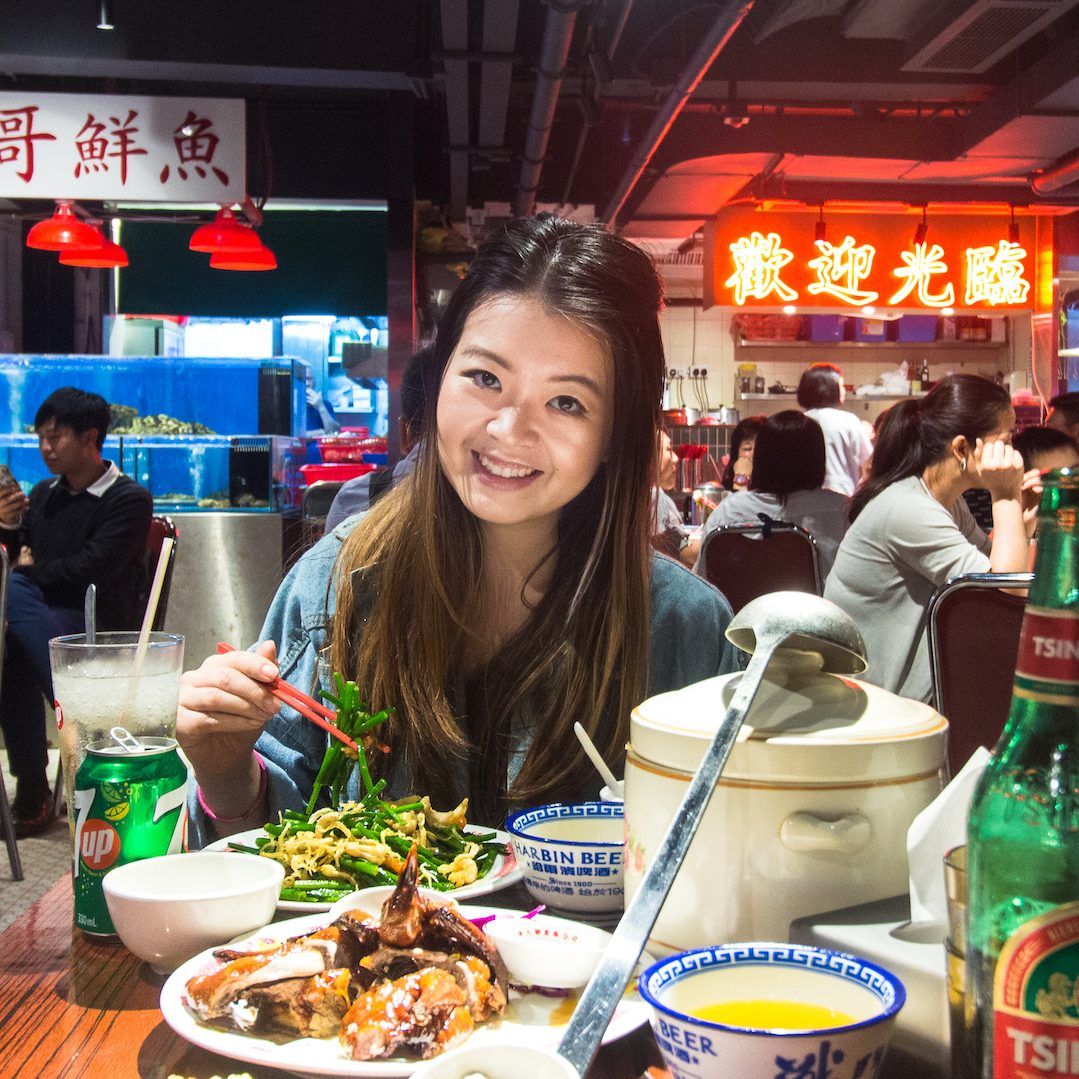
Virginia Chan, a Hong Kong tour guide and founder of Humid with a Chance of Fishballs, encounters the meme not on her feed but in her guest conversations.
“Negative or positive exposure creates awareness, and that creates conversation around the topic,” she tells BurdaLuxury. “As a tour guide, I love using it as a conversation starter – especially when I show clients herbs or an herbal cooling tea shop, the clients are able to understand more immediately what I mean by ‘yeet air’, hot air, or if my body is too hot or too cool.”
She says that people have asked about things they see online. “People are questioning why they drink ice water all day, and then coming to Hong Kong to realise that we really do drink hot water (even the Gen Z) and confirming that it really does happen in Hong Kong – that’s exactly the kind of gentle entry point that we love to use on our tours.”
For Chan, the metaphor is glacial. “The online expressions are the tip of the iceberg, but the meaning, the reasoning, the intention, and the theory behind these expressions are missed or not very well understood. Drinking hot water isn’t a random trend; it’s part of TCM.”
And then the philosophy unfurls. “Drinking jujube with goji with longan is great for warming the body, but it also depends on the internal quality of your body, as you can either be hot or cool, and you need the yin and yang to be balanced. A lot of the practices, food, and beauty trends have rooted philosophies in TCM, and the practices could be good or bad for someone depending on their individual qualities (yin or yang).”
In other words: context matters.
Guests are often fascinated by the Chinese zodiac and fortune-telling, but as Chan points out, the philosophies behind bazi readings run far deeper than surface-level curiosity. She sees the interest in Chineseness as an opportunity to educate and provide richer insight to those eager to learn, while also explaining why some practices may not suit everyone.
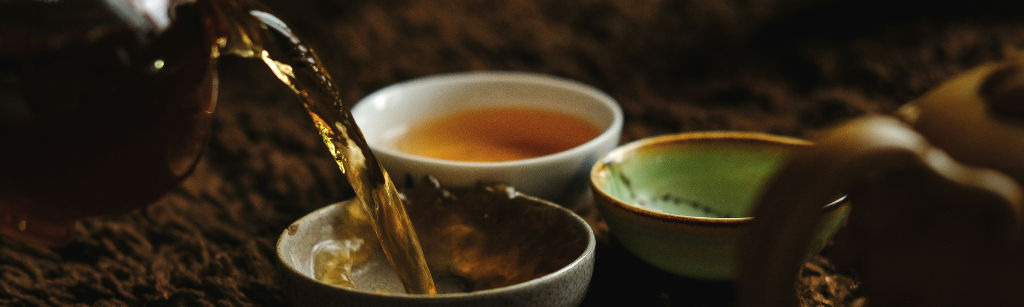
“For example, black tea is warming to the body, whereas green tea is cooling, and generally, if you’re sensitive, you shouldn’t drink cooling green teas first thing in the morning,” Chan explains. “If you’re a cool person, you should drink black tea instead of green tea. I happen to be one of those people who have a very cooling energy and therefore, felt a difference after I switched to drinking Pu-erh – and these stories become more fascinating to the guests as they already have a bit of knowledge.”
She sees the gap clearly in her day-to-day tours. “Visitors are charmed by the surface – dim sum carts, neon signs, TCM shops – but often surprised by the intensity, intention, philosophy and reasoning underneath – how TCM is very very complex.”
Identity as Era
Harca situates the phenomenon within Gen Z’s broader relationship to identity. “Gen Z doesn’t pretend identity online isn’t staged. They lean into the staging. Calling something a ‘very Chinese time’ is knowingly theatrical. It signals that this is an era – a chapter, not a permanent rebrand. But beneath that self-awareness is something more deliberate: a turn toward systems that feel intact.”
This is not accidental. Many of the dominant Western narratives – hustle culture, dating app churn, gig economy precarity – feel unstable. “Leaning into a culture that feels cyclical, ritual-based and intergenerational offers a different energy. It feels slower. It feels rooted,” she explains.
The appeal, then, is less about exoticism and more about structure.
“More importantly, it suggests longevity. Not hacking your body for output, but maintaining it over time. For a generation thinking about burnout before 30, that promise lands.”
For diasporic Chinese creators, the trend carries additional weight.
“Overall, the response has been positive from both Chinese and non-Chinese audiences, just in different ways,” says Zhu. “Chinese viewers seem excited to see everyday lifestyle habits they’ve always practised become a trend or novelty to others. I think they find it entertaining and interesting to see how non-Chinese audiences react to trying Chinese food or adopting new daily routines.”
Non-Chinese audiences respond from a place of curiosity and learning. “Many have shared that making small changes to their daily habits has improved their health and well-being,” she says. “A lot of them have also become eager to learn more, especially asking about what traditions to follow during Chinese New Year.”
The comment sections are layered with subtext: We were teased for this. Now it is chic.
Harca articulates that nuance. “Diasporic Chinese creators often deploy the phrase with irony and subtext – sometimes referencing habits they were once teased for. There’s reclamation embedded in the humour. ‘We used to get bullied for this’ is a common undertone.”
At the same time, non-Chinese participation complicates the picture. “Sometimes with curiosity and credit. Sometimes through aesthetic shorthand – silk pyjamas, herbal soups, ‘ancient wisdom’ energy – without much context. The comment sections reflect that spectrum: admiration, defensiveness, critique.”
Culture has always travelled. What is new is the speed.
“It’s that the borrowing is happening at algorithmic speed, while people are actively looking for systems that feel more stable than the ones they were handed,” she says.
While TikTok trends and viral memes offer a glossy, highly consumable snapshot of Chineseness, being immersed in the culture firsthand provides the deeper texture behind the spectacle. “I think that the everyday food, markets and neighbourhoods reveal more about how people actually live, connecting and sustain themselves. You’ll also be able to understand more of the culture, way of thinking and philosophies versus big cultural landmarks, which are often polished, and tourist-optimised.”
This attention to quotidian detail also exposes the social and economic layers of Hong Kong life – from street food pricing to the hidden hierarchies of the workforce. Films like Crazy Rich Asians reframed Asian representation through glamour, showcasing penthouses, designer wardrobes, and exclusive events. But Chan offers a grounded perspective. “Crazy Rich Asians was a wildly entertaining movie with truths in it, but the reality is, it’s like the Kim Kardashian show. The movie centres around the wealthy, the 1% that is equivalent to Jeff Bezos.”
She elaborates: “From my perspective as a Hong Kong tour guide who walks people through markets, cha chaan tengs, wet markets, dai pai dongs, and dense neighbourhoods, the Crazy Rich Asians feels like an outlier rather than a representative snapshot, and that’s why it’s rightly called Crazy Rich Asians!”
By juxtaposing cinematic fantasy with lived experience, Chan illuminates why these subtle routines resonate globally: they offer an accessible, humanised entry point in culture, one that extends beyond hashtags and virality into curiosity, learning, and authentic engagement.
Creators beyond the originators of the meme have helped amplify the cultural moment in unexpected ways – none more so than Becca Bloom, the Los Angeles-based lifestyle and fashion creator whose chic aesthetic and commentary command millions of followers across platforms. While Bloom hasn’t explicitly labelled her content under the “very Chinese time in my life” banner, her increasing engagement with elements of Chinese wellness, ritual, and seasonal lifestyle has dovetailed with the zeitgeist in a way that captured broad attention.
What Brands Can Learn
With cultural curiosity cresting around Chinamaxxing, brands are paying attention. But the lesson from creators and cultural insiders isn’t to jump on the trend like it’s a seasonal flavour – it’s to listen first, learn second, and only then act.
Lindsay Jang puts it plainly: “If you’re going to use Chinese ingredients or concepts, you need to understand and share their actual significance. Don’t just put goji berries in something because they’re trendy – understand what they do, when they’re traditionally used, and why they matter. Partner with people from the culture rather than appropriating from it. And please, stop calling everything ‘ancient Chinese secret’ – it’s not mystical, it’s practical knowledge that deserves respect, not exoticism.”
That’s the fundamental playbook – depth over decoration – and it’s already playing out in successful campaigns that go beyond pattern and into story. Luxury and lifestyle brands are increasingly anchoring their creative work in culturally rooted in narratives: Tiffany & Co. and Rimowa, for example, have woven traditional Chinese heritage into their seasonal activations, transforming retail spaces into emotionally resonant cultural experiences instead of generic festive motifs. Tiffany’s lantern-inspired installations in Beijing and Shanghai married New Year symbolism with its design legacy, while Rimowa’s collaboration with Peking opera artist Geng Qiaoyun brought intangible cultural heritage into a contemporary travel story.
The opportunity is vast: beauty brands exploring herbal formulations with context, hospitality groups reimagining tea ceremonies as stories of place and people, fashion houses drawing inspiration from silhouette and philosophy rather than stereotypes. But brands who engage must also remain humble students of the traditions they reference, rather than spectators looking for the loudest shortcut to virality.
“The trends excites me because it means people are becoming more curious about Chinese culture beyond stereotypes,” adds Jang. “But with that curiosity comes responsibility – to learn, to respect, and to recognise that this isn’t just a moment, it’s a way of life that millions of people have been living authentically for generations.”
In practice, the brands that are winning now are the ones that show up to learn before they show up to sell – a lesson that’s increasingly evident in campaigns that celebrate cultural nuance and continuity rather than cadence alone.
Why Now?
Culturally, the timing is not incidental. After years of geopolitical tension, pandemic isolation and economic precarity, younger audiences are re-evaluating inherited narratives. K-wave dominance paved the way for broader East Asian cultural curiosity. Simultaneously, the visibility of Asian stories in Western media – from rom-coms to luxury campaigns – has shifted perception.
But perhaps most crucially, wellness itself is being redefined. Restriction has lost its shine. Optimisation feels exhausting. Balance, warmth and continuity – the core tenets of TCM – offer reprieve.
For Sherry Zhu, the meaning is personal. “For me, Chinese culture has always been a source of joy rather than a liability. From the food I eat to the closeness I have with my family, to the folk dances I learned as a little girl, to small daily habits, my culture has brought me warmth and joy. I’ve always felt that joy is something worth sharing.”
And in sharing, something subtle happens.
“It’s been interesting to see how small things like drinking hot water or wearing house slippers have resonated with people as habits that make them feel more grounded or balanced. And I hope those small things become their window into learning more about the culture that I love.”
Because beneath the caption, beneath the silk and the simmer, lies a deeper question: in an era defined by speed and spectacle, what would it mean to choose warmth?
For now, millions are answering with a bowl of congee and a wink to the camera – aware of the irony, but perhaps, quietly, seeking something steadier beneath it.
BurdaLuxury’s Lens
“You met me at a very Chinese time in my life” may read like a punchline, but its staying power suggests something deeper. What looks like a meme about hot water and house slippers is, in fact, a quiet recalibration of cultural capital.
Ultimately, what makes this moment resonate is not novelty but warmth. In an era defined by optimisation and burnout, the appeal of ritual, balance and intergenerational continuity feels quietly radical. If this is a “very Chinese time,” it may be because steadiness – not spectacle – has become the new aspiration.