

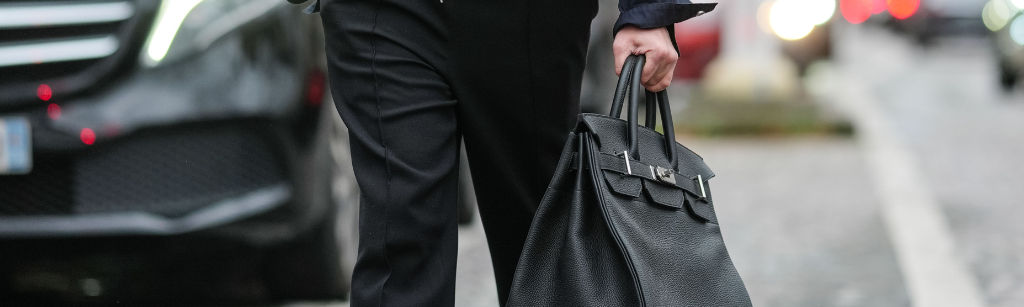
On the shining avenues of global fashion capitals and within the hushed luxury salons of Paris and Milan, a quietly audacious shift is taking place. The legendary Hermès Birkin bag – once the quintessential symbol of feminine luxury – is being carried by men. Concurrently, androgynous tailoring has moved from edgy fringe to mainstream norm. These two phenomena are not isolated; they marry in a broader redefinition of luxury itself: iconic bags meet gender-neutral tailoring, challenging traditional notions of status, style and exclusivity.
If one were to scan recent red-carpet photographs, street-style feeds and luxury-brand campaigns, one observes men swinging top-handle handbags, women in sharply tailored double-breasted suits once deemed masculine, models across the gender spectrum in long-line jackets and high-rise trousers. These are not whimsy or niche experiments. They mark a fundamental shift in how fashion houses, designers and consumers conceive of luxury: no longer bounded by “men’s” and “women’s” categories, luxury is being rewritten.
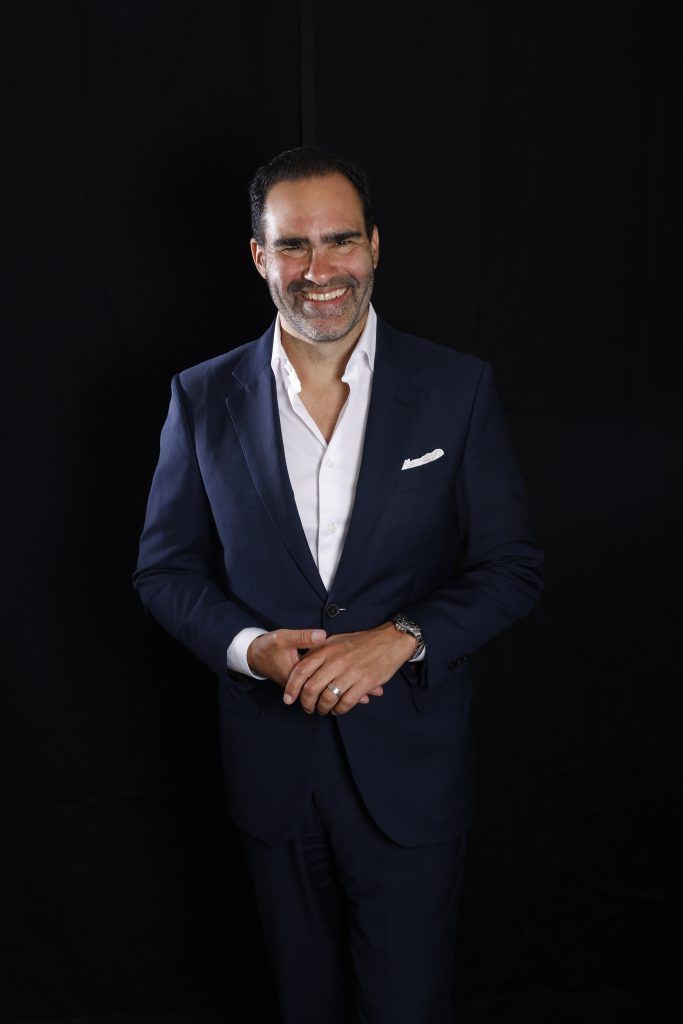
At the centre of this shift resides the Birkin bag. It is more than an accessory. And alongside it, the tailored suit – the archetypal symbol of power and refinement – is being re-worn and re-interpreted by all identities. These two threads – the bag and the suit – converge to illustrate a new luxury grammar. As Dr. Daniel A. Langer, a luxury strategy expert and CEO of Équité, explains to BurdaLuxury, “The Birkin traces its lineage to the Hermès Haut à Courroies, a utilitarian bag originally created for carrying equestrian gear and used by both men and women. That heritage explains why larger Birkin models, particularly the HAC, have been adopted by men who appreciate its balance of craftsmanship, elegance, and practicality, plus the prestige of the iconic Birkin.” He adds, It is not about gender fluidity but about the evolution of luxury categories themselves. Certain symbols of refinement are no longer bound to one gender.”

And Luca Solca, analyst at research group Bernstein, underscores the commercial dimension, telling BurdaLuxury: “Imagine if men adopted bags like they were buying men’s purses in the 70s (the ‘borsello’). This would give new growth to the leather-goods category. I see therefore a great interest by brands to push handbags adoptions beyond the gender divide. And I guess the first step could be to make bags attractive in the gender fluid space.” These two remarks anchor both the cultural and economic dimensions of the shift: one sees heritage and identity, the other sees growth and category disruption.
The Birkin for Men – Heritage, Status and Identity
Let us begin with the Birkin. The narrative often opens in 1984 with Jane Birkin an Jean-Louis Dumas. “A great design, and that is what the Birkin bag is,” Dana Thomas, a renowned fashion journalist and author, tells BurdaLuxury. “As I recounted in my book Deluxe: How Luxury Lost Its Luster, the idea for the Birkin was born when British actress Jane Birkin was sitting next to Hermès chief executive Jean-Louis Dumas on a flight, and described to him what the perfect bag would be.” It was essentially a chic tote – and totes are non-gendered. “Everyone, every age, can and does use a tote,” adds Thomas. “I wonder why it took so long for men to pick up on it. The Birkin is the most excellent, beautiful, utilitarian carry-all.”

The bag’s genealogy goes even deeper: the Haut à Courroies riding bag, crafted originally for equestrian gear and used by both men and women, informs the Birkin’s structure. In adopting the Birkin – especially the larger HAC models – men are engaging not in borrowing a “women’s bag,” but in reclaiming an object whose roots were, in fact, gender-agnostic.
When a man carries a Birkin, it is not an act of novelty – it is an act of identity. He is signalling craftsmanship, cultural authority and design intelligence. The bag ceases to be simply a “women’s accessory” and becomes instead a universal symbol of luxury. By doing so, he asserts: I recognise ultimate refinement. In an era were the market of luxury is beyond gender, the Birkin emerges as a vessel of taste.
Celebrities amplify this shift. Global icons such as Timothée Chalamet, David Beckham and A$AP Rocky have been photographed carrying Birkins. These images propagate a new visual lexicon: men with Birkins are confident, self-assured, redefining luxury codes. The market data substantiate the cultural movement with commercial weight. According to one report from Cadence Research, the men’s luxury bag market was valued at approximately US$11.49 billion in 2024, and is projected to reach around US$15.97 billion by 2032, at a CAGR of ~4.2%.
These numbers reflect more than growth – they reflect changing categories. When luxury bags are no longer gendered, the market opens to new consumers and new dynamics. In this narrative, the man carrying a Birkin is not adopting femininity – he is asserting sophistication, rejecting binary norms, and aligning with heritage. Luxury becomes about the singular bearer, not the gender category.
Androgynous Tailoring Through History
While the accessory story is vivid, the parallel thread of tailoring is equally transformative. Tailoring has long symbolised power, structure and refinement, especially men’s tailoring. Women borrowing menswear began in the early twentieth century with icons like Katherine Hepburn and Coco Chanel; in the ’60s, Yves Saint Laurent’s “Le Smoking” elevated the women’s tuxedo. Yet what we witness today is neither more borrowing no mimicry. It is the dissolution of binary design codes.
Runways have become the laboratories of this shift. Designers such as Alessandro Michele at Gucci, Rick Owens and Jonathan Anderson at Loewe, Peter Do for Helmut Lang, and the brand Erdem’s genderless collection, have turned tailoring into a fluid terrain. On the runway, one sees broad shoulders replacing the masculine only, lapels extending beyond gender-code, trousers cut to fit neither traditionally male nor female forms, fabrics once coded feminine (silk, satin) invading masculine silhouettes. The result is a silhouette that communicates power, elegance and ambiguity.
Langer describes the dynamic: “Consumer behaviour is the main catalyst behind the rise of gender-neutral fashion. Modern clients, especially younger generations, reject rigid boundaries and expect fashion to reflect who they are, not what they are told to be.” The tailoring revolution is therefore not top-down trend-making; it is consumer-driven. Culture, digital platforms and fashion houses amplify it, but the impetus is identity: people want their clothes to reflect them, not the binary they were assigned.
This shift is not aesthetic alone – it is symbolic. A man in a lilac double-breasted blazer paired with a Birkin is simultaneously asserting authority and subverting the norm. A woman in a sharply tailored pinstripe suit is no longer playing “men’s clothes” but embodying power on her own terms. Luxury tailoring, long the domain of men in power, extends to anyone seeking structure and elegance.
Celebrity Influence and Gen Z Adoption
The catalyst for normalisation of these reverse-gender trends lie significantly in celebrity influence and the Gen Z engine. When Harry Styles appears in a Gucci jacket and dress on the cover of a magazine, or Brad Pitt embraces a kilt on the red carpet, or Billie Eilish and Sabrina Carpenter wear menswear-driven tailoring, the visual reverberation is global. The trends infiltrates Instagram, TikTok, viral street style and discourse. These are not isolated moments – they become cultural markers.
As Langer states: “Cultural movements and industry trends have amplified this shift, but they respond to a deeper transformation in values. People now seek authenticity, relevance, and emotional connection. Digital platforms have accelerated this change, giving consumers direct influence over creative direction.” The upshot: Gen Z and younger millennials are not content with being styled – they want to style themselves. Their expectations reshape categories.
Dana Thomas agrees. “I think gender-neutral fashion is more about consumer demand and cultural movements than industry innovation,” she explains. “Fashion likes to say it sets trends. But for the last 20-25 years, the business has been following trends already set by street fashion, or youth movements, or cool subcultures. Big fashion reactionary, not proactive – it commercialises rather than invents. Creativity and cultural shifts happen outside that corporate sphere.”
Market research underlines this. The global gender-neutral clothing market has been valued at around US$3.8 billion in 2024, with projections suggesting it will reach approximately US$7.2 billion by 2030 (at a CAGR of ~10.6%). In bags, one fashion intelligence piece observed that designer bags now account for about 15 per cent of men’s bag sales – a proportion up by about five percentage points since 2020, per Vogue Business. The men’s luxury bag market grew approximately seven per cent in the 12 months ending January 2023, driven especially by cross-body and tote styles that suit a broader range of male consumers, according to consumer behaviour advisory firm Circana.
Fashion’s axis is shifting not only in design, but in the demographic of adoption. Athletes and sports figures are now part of the story: when Travis Kelce, LeBron James or Jacob Elordi carry luxury handbags, the gesture affirms that men now see these bags not as feminine accessories but as status items. The conversation moves from “who should carry a bag” to “who wants a bag as an extension of identity.”
In sum, celebrity visibility, Gen Z values, market statistics and designer strategy converge to drive this shift. The trend is not fleeting – it is now embedded in the luxury system.
Industry Push – Luxury Houses & Market Dynamics
What we are witnessing is not a ripple but a strategic recalibration across luxury houses. Brands that once maintained clear men’s and women’s divisions are now repositioning. The apparel and accessory pipeline is evolving accordingly.
Luxury houses such as Gucci have publicly embraced genderless categories – Gucci’s “MX” section stands as a precedent. Tailored now encompasses gender-free cuts, expanded size ranges and silhouettes that transcend male and female binaries. Brands no longer only speak to “men” or “women” – they speak to individuals with moods, attitudes, identities.
Concrete examples abound. Fendi’s Men’s Fall-Winter 2024-25 collection featured blanket-wool kilts and large pillowy bags – garments and accessories that blur gender boundaries. Miu Miu’s Fall-Winter 2023-24 runway emphasised broad-shouldered tailoring and minimal embellishments, crafting silhouettes and straddle traditional divisions. Labels such as We11done have explicitly positioned themselves as gender-neutral, appealing to Gen Z and millennials with oversized blazers, fluid trousers and relaxed fits.
These shifts reflect more than fashion – they reflect business strategy. Leather goods houses now see men as promising growth segment; tailoring houses see identity as more salient than gender. The narrative of “this is for her” or “this is for him” is giving way to “this is for anyone who values excellence, heritage and self-expression.”
In operation, brands must still juggle traditional constraints: fit, sizing, proportion, heritage codes, supply-chain complexity. But the mindset has shifted: designing for mindsets, not demographics. As Langer states: “The future of luxury lies in understanding that gender-neutral fashion is not about erasing differences but about expanding choice. The most forward-thinking brands design for mindsets, not demographics, and connect through creativity and meaning.”
In other words, accessories and tailoring are no longer tethered to gender – they are tethered to identity.
Pros, Cons & Critiques
Before we herald a wholesale victory, the shift warrants nuanced reflection.
On the positive side, the expansion of gender-neutral luxury offers inclusivity, creative freedom and relevance. It grants consumers – particularly younger ones – the opportunity to express identity rather than conform to inflicted norms. For brands, it opens new markets, fresh storytelling, and deeper relevance. The visible rise in men’s handbags and fluid tailoring demonstrates latent demand and newfound possibility.
Yet there are valid critiques. One risk is tokenism: when a brand labels a collection “gender-free” but the product clearly fits male or female codes, the promise rings hollow. fit remains a challenge – size gradations, tailoring proportions and bag ergonomics were historically calibrated for gender-specific bodies. Brands must invest in inclusive design rather than rely solely on marketing.
Another concern is status dilution. A part of luxury’s value lies in exclusivity and difference. If every man carries a Birkin, the rarity shrinks. While the market remains niche, brands must balance expanded adoption with the scarcity and desirability that define luxury. Social questions also arise: does a man carrying a traditionally feminine bag or a woman in a men’s suit truly challenge gender norms – or is it merely status performance within elite circles? The difference lies in intent, context and durability.
From a business vantage, brands must manage heritage, craftsmanship, category alignment and consumer expectation. The transition is complex, not autonomic.
Future of Luxury & Gender-Neutral Fashion
As we gaze ahead, the trajectory is clear: this is not a passing trend but a structural realignment. Tailoring will increasingly span the full spectrum of identity. Handbags and accessories will be designed for identity, not gender. the resale, sustainability and digital dimensions of luxury will further intersect with these shifts.
Tailoring will become more inclusive of body types, genders, and identities. Collections will increasingly blur men’s and women’s lines; size ranges will widen and silhouettes will adjust not to “male body” or “female body” but to human body. Bags and accessories will be framed as identity tools: not “men’s travel bags” or “women’s top-handle,” but “the bag I carry because it suits my life and expression.” The men’s luxury bag market’s projected growth underscores this potential.
Sustainability and ethical sourcing will play more than a supporting role – they will often be central. Younger consumers expect luxury to bring meaning, not only a price tag. Gender-neutral design aligned with sustainability , heritage and storytelling holds elevated weight.
The digital-first era will amplify these shifts. The resale ecosystem, social-media visibility, influencer culture, limited drops and scarcity narratives all favour categories that break down gender barriers. As Langer noted, designing for mindsets, not demographics, will dominate. Luxury is moving from binary categorisation to individual expression.
In the case of the Birkin: what was once a “women’s bag” is evolving into a universal icon of refinement. In the case of tailoring: what was once “men’s power suit” is now “power suit for any who choose to wear it.” Luxury is being un-gendered.
In China
So, has China adopted gender-fluid dressing, too? Certainly – especially among Gen Zs, where it has grown from an underground movement to a key part of their identity. “For many young people, it’s about expressing who they are rather than fitting into old expectations of how men and women ‘should’ dress,” Ashley Dudarenok, Founder of ChoZan and Alarice, tells BurdaLuxury. “You can see this shift everywhere – from the rise of homegrown gender-neutral brands to the way everyday fashion is being shared on platforms like Xiaohongshu.” According to Dudarenok, it was become common to see people mixing styles that go beyond traditional norms, especially in major cities.
“By late 2025, it’s less about a specific ‘androgynous’ look and more about confidence, freedom, and creativity,” adds Dudarenok. “It’s a cultural shift driven by zìxìn – this new wave of self-assurance and pride in individuality that defines young Chinese consumers today.”
While consumer demand, cultural movements and industry innovation in China play a role in this shift, the real driver is cultural – a self-confidence rooted in authenticity that sets the tone. “That mindset has shaped a new kind of consumer demand: fashion isn’t just about looking good or signalling status anymore,” says Dudarenok. “It’s become a language of identity and self-expression. Designers and brands – both local innovators and global luxury houses – are no longer introducing gender fluidity as a novelty. They’re adapting to keep pace with a generation that’s already living it. Increasingly, people are spending not just to own something, but to feel something – to buy into happiness, creativity, and experience.”
BurdaLuxury’s Lens
What is unfolding in luxury fashion is not simply a trend – it is a structural transformation. The moment a man picks up a Birkin is symbolic not because it is shocking, but because it marks the end of a rigid taxonomy. When tailoring lives on a spectrum of identity rather than a binary axis, we step into a new era.
Luxury has always been about distinction: who you are, whom you know, what you own. It has also been about permission: looking the part, being recognised as elite. What the reverse-gender trend gives us is permission to be ourselves while wearing the uniform of luxury. Men carrying handbags, women in broad-shouldered jackets, models without gender categories – all move fashion beyond binaries.
For luxury houses, the play is elegantly simple: make your icons available to more minds, not more genders. Craft your heritage to speak to all who recognise this authority. Present your accessories and tailoring as vessels of identity and craftsmanship.
If luxury once asked “what gender are you?” it now asks “who are you?” The Birkin and the tailored suit stand side by side as an answer. In the years ahead, we will watch the accessory cases refill, the runways widen, and the status symbols diversify. But more importantly, we will watch fashion shed its binary armour and become – finally – as fluid, expressive and infinite as the individuals who wear it.